
Thrace
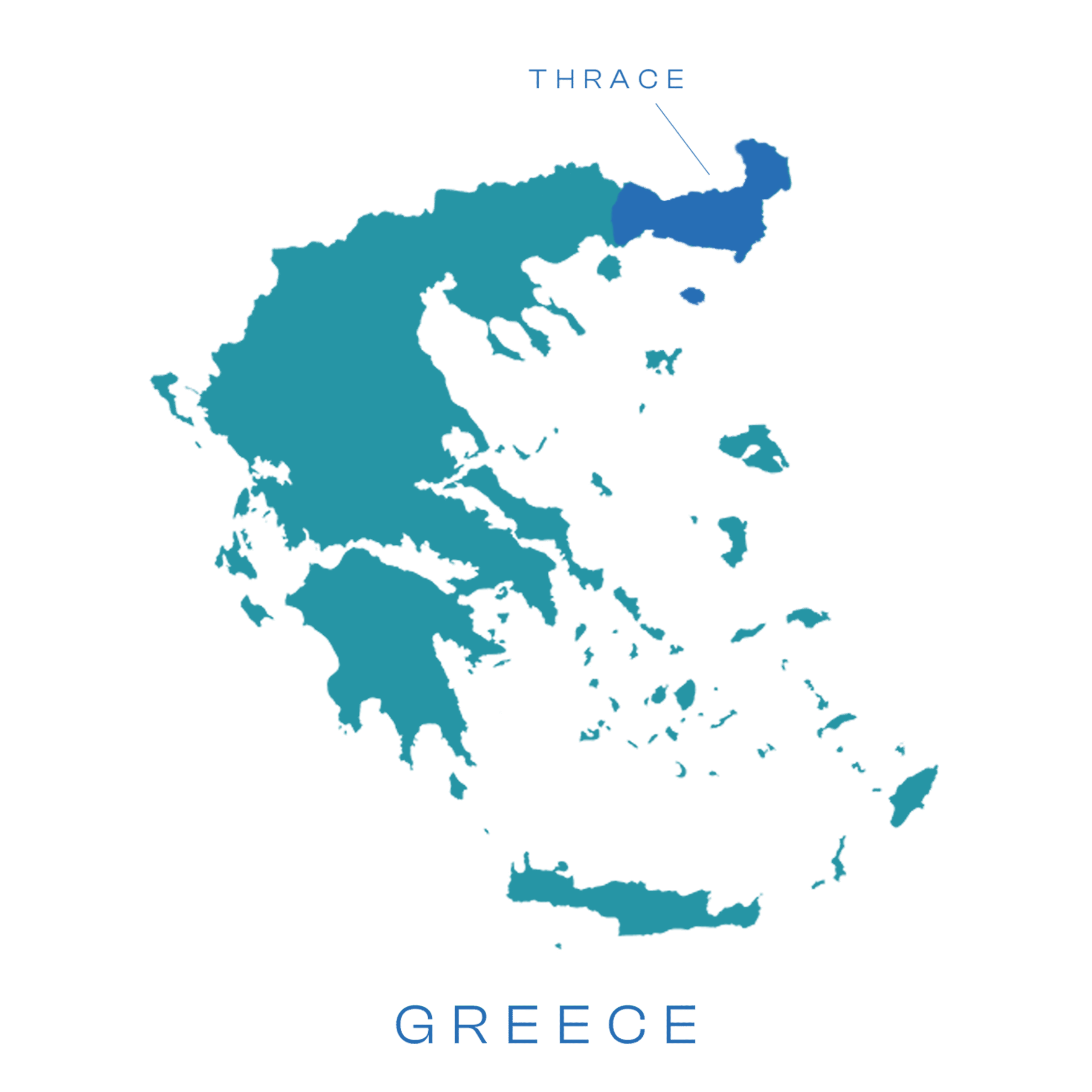
Thrace, located in northeastern Greece, is a little-known but historically important wine region with deep cultural and viticultural roots. Bordered by Macedonia to the west, the Aegean Sea to the south, and the borders of Bulgaria and Turkey to the north and east, Thrace occupies a crossroads of civilizations that have shaped its traditions for centuries.
Its climate is mainly continental, with hot summers, cold winters, and marked seasonal contrasts, while the soils range from limestone and clay to fertile alluvial deposits. These conditions produce structured wines that combine freshness, aromatic intensity, and regional character.
Viticulture here dates back to ancient times, with the ancient Thracians considered one of the first wine-producing peoples in Europe. Thracian wines were already praised by Homer in the 8th century BC, testifying to their long-standing reputation. Although the region does not yet have its own AOP, it preserves a strong local identity thanks to its grape varieties and traditions.


Grape varieties and key styles
Native white grape varieties
Roditis occupies an important place, producing lively, mineral wines. Assyrtiko and Athiri bring freshness and structure, while Malagousia adds aromatic intensity. Zoumiatiko, a rare local white grape variety, contributes to the distinctive regional character.
Native red grape varieties
Xinomavro and Limnio thrive in Thrace, producing medium-bodied to full-bodied wines with lively acidity, fine tannins, and complex aromas. Limnio, one of Greece’s oldest grape varieties, shows remarkable adaptability in this region. Other indigenous red varieties include Mavroudi, prized for its depth, structure, and aging potential, which produces deep-colored, full-bodied wines with firm tannins, balanced acidity, and aromas of black fruit, herbs, and spices. Pamidi offers lighter, more accessible wines, often vinified as rosés, adding versatility to Thrace’s range of red wines.
International grape varieties
In addition to its local grape varieties, Thrace also cultivates international varieties such as Cabernet Sauvignon, Merlot, Syrah, Carignan, Grenache, Chardonnay, and Sauvignon Blanc. These are often used in blends with indigenous varieties, creating wines that combine familiarity with Thracian identity.

Notable areas
Evros
The northernmost part of Thrace, close to the borders with Bulgaria and Turkey, produces structured red wines and fresh white wines, reflecting the cooler climate and fertile soils.
Alexandroupoli and Soufli
The coastal plains and river valleys favor aromatic white wines and balanced blends from local grape varieties, offering fresh, accessible wines that express the region’s terroir.

Wine heritage
Thrace’s winemaking history stretches back centuries, influenced by both Greek and Thracian traditions. While the region has not yet achieved widespread international recognition, small family estates and dedicated producers are steadily bringing attention to its indigenous varieties. Thrace remains a region of potential, offering wines that combine freshness, elegance, and a uniquely northern Greek identity.


