
Macedonia
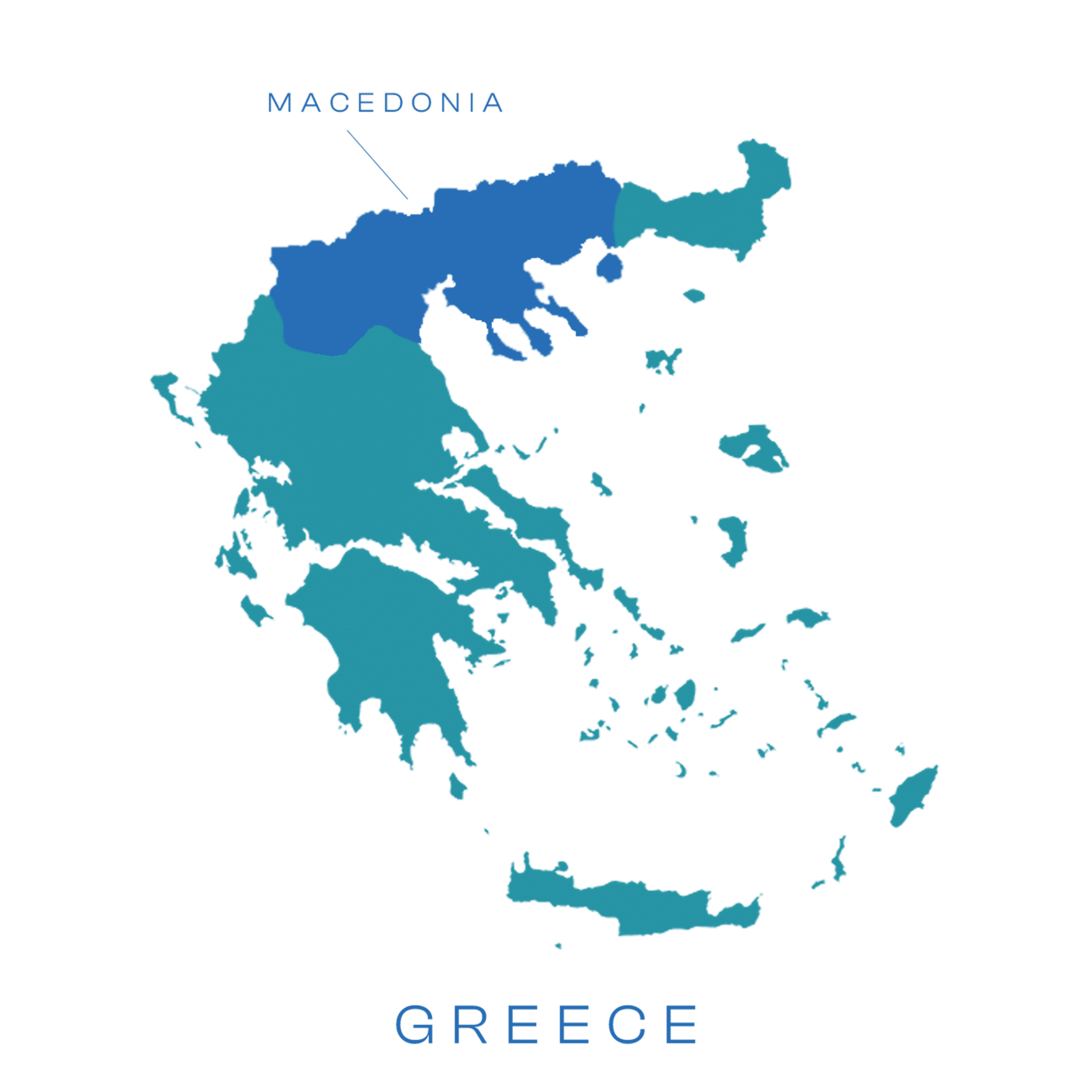
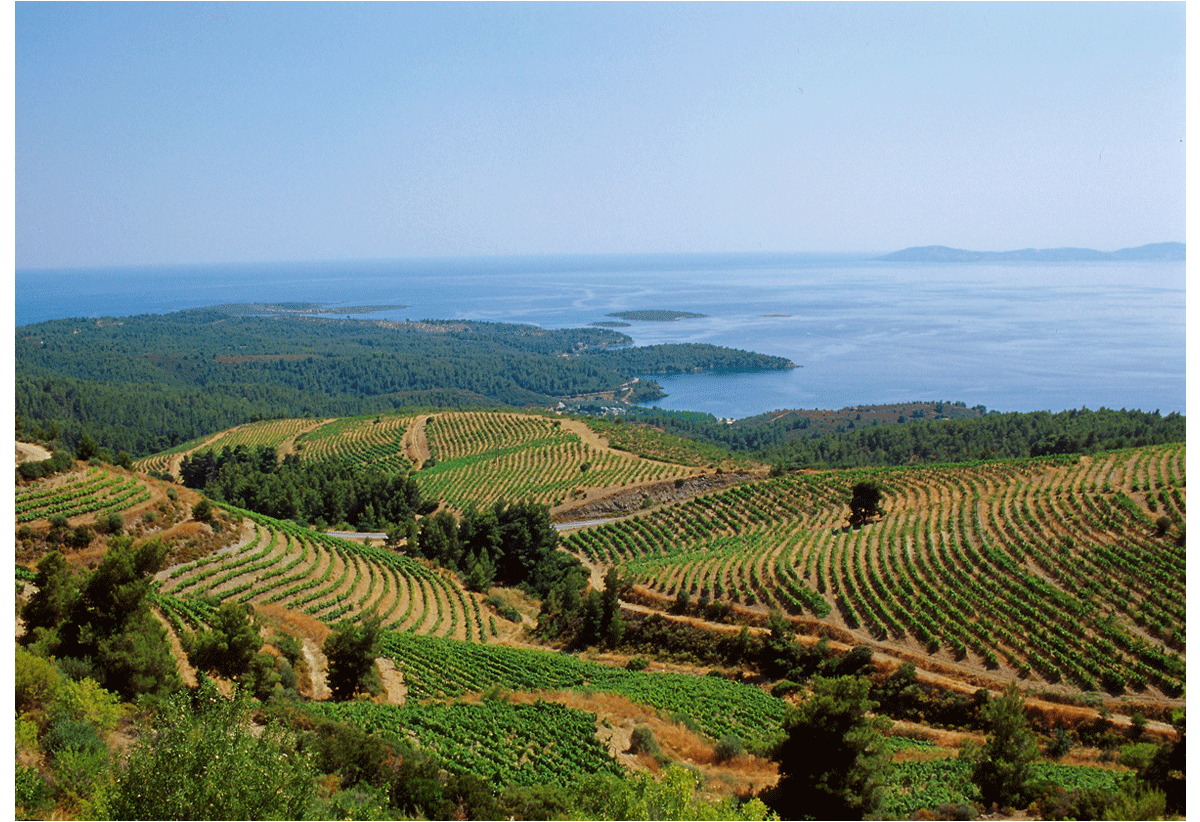
Macedonia, Greece’s largest wine-producing region, is located in the north of the country and is often referred to as the “Greek Tuscany” due to its picturesque landscapes and innovative viticulture. Primarily known for its red wines, Macedonia offers remarkable diversity in terms of altitude, soil, and climate, resulting in a wide range of wine styles, from structured, age-worthy reds to delicate whites and elegant sparkling wines.
The region is broadly divided into western, central, and eastern Macedonia, each with distinct characteristics. Viticulture is deeply rooted here: Macedonian tribes cultivated vines in ancient times, the first Greek case of phylloxera was recorded near Thessaloniki in 1898, and later, refugees from Asia Minor revitalized the vineyards, bringing new varieties and traditions.

Grape varieties and key styles
Native white grape varieties
Roditis dominates Macedonia’s white vineyards, producing lively, aromatic, and mineral wines. Moschato (Muscat grape varieties) adds an extra layer of aromatic expression, particularly in lighter, fresher styles. There are also smaller plantings of Assyrtiko, Athiri, and Malagousia, often used in blends or experimental cuvées, which add complexity and nuance to the region’s white wines.
Native red grape varieties
Xinomavro is the flagship variety, producing complex, structured, age-worthy wines with firm tannins and high acidity. Negoska, often blended with Xinomavro in Goumenissa, contributes body, fruit, and color. Limnio, one of Greece’s oldest grape varieties, brings freshness, elegance, and herbaceous character. Moschomavro, a rare and aromatic red grape variety, adds floral and spicy notes and is often used in blends to enhance complexity and nuance. Koniaros, recently brought back into fashion, produces full-bodied red wines with deep color, notes of black fruit, balsamic and cocoa, firm tannins, balanced acidity, and elegant structure.
International grape varieties
Cabernet Sauvignon, Merlot, Syrah, Grenache, Cabernet Franc, Sauvignon Blanc, and Chardonnay are also grown, particularly in the regions of Drama and Central Macedonia. They are often used in blends or as varietal wines that complement the range of indigenous grape varieties.
Wine styles
Dry whites – Fresh and aromatic, often mineral, highlighting wines made from Roditis and Muscat.
Reds – Xinomavro-based reds dominate, with blends of Negoska and Limnio enhancing their structure, color, and complexity.
Rosé and sparkling wines – Particularly those from Amyndeo, where the high altitude and sandy soils give Xinomavro a lighter, floral, and aromatic expression, ideal for sparkling wines.
Sweet wines – Produced in limited quantities from Muscat and other aromatic varieties.
PDO wines – PDO Amyndeo (red and sparkling wines made from Xinomavro), PDO Goumenissa (Xinomavro-Negoska blends), PDO Naoussa (Xinomavro red wines) and PDO Coteaux de Meliton (white and red wines made from Athiri, Assyrtiko, Roditis, Limnio, Cabernet Sauvignon, and Cabernet Franc grapes), reflecting the diversity of terroirs, grape varieties, and traditional winemaking methods throughout Macedonia.

Notable areas
Naoussa
A cooler, high-altitude Protected Designation of Origin (PDO) in central Macedonia, Naoussa is one of Greece’s premier red wine appellations, renowned for its single-varietal Xinomavro wines. The appellation encompasses nine villages, where vineyards are planted on heavy soils composed of a mixture of limestone, silt, sand, and clay, creating diverse micro-terroirs. Clonal selection is particularly important here, as it allows winemakers to express precision and consistency.
Naoussa wines are renowned for their depth, complexity, and remarkable aging potential, the longest of any Greek wine. Traditional Naoussa tends to be pale in color, with discreet primary aromas, moderate tannins, lively acidity, and earthy, savory flavors, often derived from older vines and meticulous hand harvesting. Modern Naoussa, on the other hand, has a deeper ruby red color, softer tannins, and richer aromas, achieved through targeted yields, oak aging, and advanced winemaking techniques, producing more accessible wines while preserving the structure and character inherent in Xinomavro.
The appellation has embraced the concept of “crus,” with single-vineyard wines that highlight the terroirs and specific characteristics of the vineyard. These single-vineyard wines display subtle differences in soil, altitude, and exposure, offering a detailed portrait of the Naoussa landscape and the expressive potential of Xinomavro.
Goumenissa
Located in the rolling foothills of Mount Paiko in Central Macedonia, Goumenissa is a small, distinctive wine region with a long history of vine cultivation. The region’s vineyards benefit from hilly terrain, moderate altitude, and well-drained soils composed of clay, limestone, and sandy silt, creating varied microclimates. Xinomavro is the dominant grape variety, traditionally co-fermented with at least 20% negoska, which adds color, body, and sweetness, producing deeply aromatic, structured, and age-worthy red wines. Goumenissa wines combine elegance and accessibility, reflecting the unique terroir of this historic region of Macedonia.
Siatista (Western Macedonia)
A high-altitude mountainous area historically known for its sweet red wines, particularly the traditional “Vin Liastos,” a straw wine made from grapes dried in the open air in shaded areas. Today, more than 110 hectares of Xinomavro thrive here, shaped by the region’s cool climate and inland isolation.
Drama (Eastern Macedonia)
Surrounded by mountain ranges and far from maritime influence, Drama is located in a region world-renowned for its marble quarries, which have historically brought prosperity and infrastructure to the area. With winegrowing roots dating back to ancient times, modern vineyards have focused since the 1980s on Bordeaux-inspired blends from international grape varieties. The economic boom linked to marble extraction has enabled investment in vineyards, technology, and winery development, helping to make Drama a recognized center for quality wines, despite its modest size and lack of a protected designation of origin (PDO).
Amyndeo
This high-altitude plateau in northwestern Macedonia, on the border with Albania and North Macedonia, is one of Greece’s most important regions for cool-climate wines and sparkling wines. At an altitude of 650 meters, the vineyards grow on sandy alluvial soils that are naturally resistant to phylloxera. The continental climate, with cold winters, cool summers, and constant winds, preserves acidity and freshness. Xinomavro expresses itself here in a lighter, aromatic, floral, and fruity form, perfect for elegant sparkling wines. Rosés and still reds are also produced, highlighting freshness, acidity, and persistent aromas.
Thessaloniki, Nea Michaniona, Chalkidiki, and Mount Athos
The coastal area of Central Macedonia is a dynamic wine region rich in history, with varied microclimates and soils that favor the cultivation of both indigenous and international grape varieties. Around Thessaloniki and its surroundings, notably Nea Michaniona, Epanomi, Langadas, and Kalohori, local and international grape varieties thrive side by side. Nea Michaniona, founded in 1923 by refugees from Asia Minor, benefits from sandy and clay soils, mild winters, cool summers, and the refreshing boukadoura wind, producing fresh, aromatic, and complex wines with a strong historical identity. In Chalkidiki, Assyrtiko and Athiri produce aromatic white wines, while Limnio dominates the reds, complemented by selected international varieties; the maritime climate and soil diversity yield balanced, terroir-influenced wines. On Mount Athos (Agion Oros), monastic vineyards preserve centuries-old viticulture, cultivating indigenous grape varieties using traditional methods to produce sacramental wines and everyday wines. The steep, rocky sites and centuries of monastic expertise have profoundly shaped the region’s wine culture.

Wine heritage
Macedonia’s heritage blends ancestral practices, Byzantine monastic traditions, and modern innovations. From the Xinomavro of Naoussa, which improves with age, to the sparkling wines of Amyndeon, the modern red wines of Drama, and the traditional straw wines of Siatista, the region expresses both its roots in Greek tradition and its dynamic evolution.
In addition to wine, Macedonia has a rich tradition of distilling tsipouro, a grape marc spirit, particularly around Naoussa, Amyndeon, and Thessaloniki. Tsipouro production reflects local practices for using residual grape marc, contributing to the region’s gastronomic and cultural identity.
Today, a new generation of producers is highlighting Macedonia’s role in shaping the identity of modern Greek wine.

Producers
in this region


