Cyclades
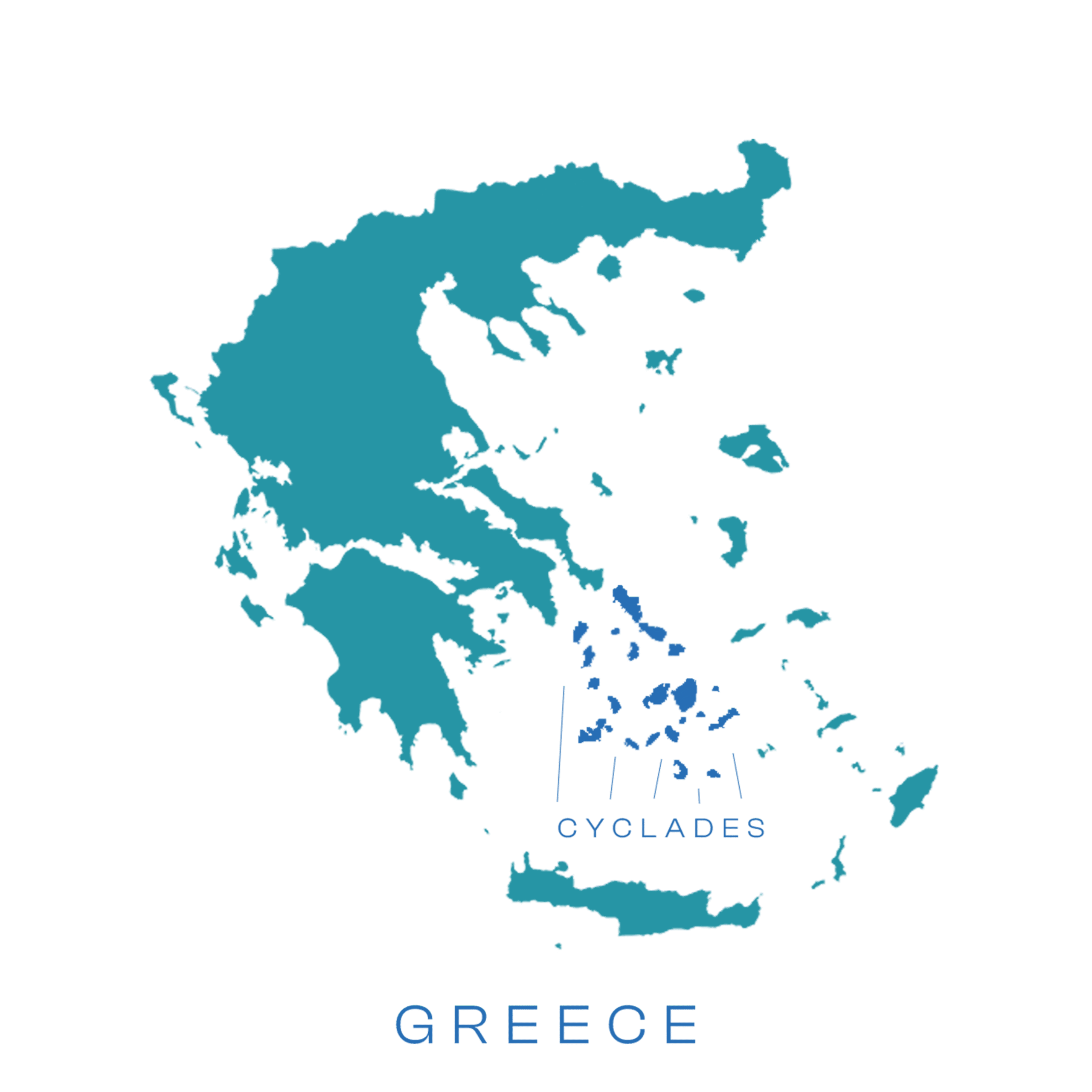
The Cyclades, an archipelago scattered across the heart of the Aegean Sea, is one of Greece’s most iconic wine regions. Known for their rugged landscapes, volcanic soils, and strong winds, these islands have been cultivating grapes since ancient times and have played a central role in the Aegean wine trade.
Despite challenges such as aridity, water scarcity, poor soil, and increasing pressure from tourism, winegrowers have preserved indigenous grape varieties through ingenious viticultural practices, producing wines that reflect both the harshness and beauty of their environment.


Grape varieties and key styles
Native white grape varieties
- Assyrtiko dominates, particularly in Santorini, producing powerful, mineral wines with high acidity and remarkable aging potential.
- Monemvassia is essential in Paros and plays a role in historic Malvasia-style wines.
- Athiri and Aidani add an aromatic touch to blends, particularly in Santorini.
- Potamisi, a historic grape variety from the Cyclades, produces discreet white wines with herbaceous notes and decent acidity, increasingly appreciated for their authenticity and character.
- Serifiotiko, brought back into fashion in Serifos, brings freshness, a subtle saline character, and a light, accessible profile, making it a charming expression of the island’s terroir.
Native red grape varieties
- Mandilaria, widely planted, produces structured, deeply colored red wines, often blended with whites in Paros.
- Mavrotragano, once almost extinct in Santorini, now produces intense, age-worthy red wines with aromas of black fruit and spice.
- Aidani Mavro and Mavro Athiri, traditionally found in Paros, bring aromatic complexity, supple tannins, and regional expression to local red blends.
Wine styles
Dry white wines (particularly those made from Assyrtiko grapes) are characteristic, marked by their minerality, salinity, and freshness.
The island of Santorini also produces Nykteri, a traditional dry wine made from fully ripe Assyrtiko grapes (often blended with Aidani and Athiri grapes). The grapes are harvested before dawn, pressed immediately, and the must is racked within the day. The wine is aged in oak barrels for a long period, giving it a slight maderization, richness, and depth, as well as excellent aging potential.
Red wines range from robust Mandilaria-based wines to more nuanced expressions of Mavrotragano.
Santorini Vinsanto is the region’s most famous sweet wine. It is made from sun-dried grapes (mainly Assyrtiko with Aidani and Athiri) and is renowned for its complexity, balance, and longevity.
The Malvasia Paros PDO offers naturally sweet wines from Monemvassia, combining modern production with medieval trade.

Notable areas
Santorini
One of the most extraordinary wine-growing regions in the world, characterized by its volcanic soils, immunity to phylloxera, and unique kouloura (basket) cultivation system that protects the vines from wind and sun. Assyrtiko dominates the vineyards, covering around 70% of the total planted area, and forms the basis of Santorini PDO wines, renowned for their saline minerality, intensity, and aging potential. The island also produces the historic sweet wine Vinsanto, made from sun-dried Assyrtiko, often blended with Aidani and Athiri, famous for its complexity, balance, and longevity.
Paros
Having obtained PDO status in the early 1980s, Paros produces two unique appellation wines: Paros White PDO (100% Monemvassia) and Paros Red PDO (a blend of Monemvassia and Mandilaria—the only Greek PDO allowing the co-vinification of white and red grapes). In 2011, PDO Malvasia Paros was introduced, made from sun-dried Monemvassia with up to 15% Assyrtiko. With around 300 hectares of vineyards, Paros combines rich limestone soils with fragments of the famous Paros marble, a milder island climate and old bush vines, cultivated according to the local aplotaries system.
Tinos
An island of granite and wind-swept terraces, shaped by the iconic Volakes (granite rocks) that shelter the vineyards and define the terroir. Assyrtiko and other indigenous grape varieties produce wines with pronounced minerality and tension, while modern producers have helped make Tinos a rising star of Cycladic viticulture.
Naxos
The largest island in the Cyclades, with varied microclimates that favor both whites (Assyrtiko, Monemvassia) and reds (Mandilaria), offering structured and authentic wines that reflect its mountainous terrain.
Syros
Combining maritime influence and limestone soils, Syros cultivates Assyrtiko and Serifiotiko, producing elegant, mineral wines that embody the freshness of the Cyclades.
Serifos
A hidden gem undergoing a renaissance. Native grape varieties such as Assyrtiko, Monemvassia, Mandilaria, and Serifiotiko are cultivated using organic and minimal intervention practices, producing wines with a salty freshness and robust character.

Wine heritage
The Cyclades hold one of the oldest and most storied winemaking traditions in the Mediterranean. Vineyards here date back to antiquity, tied to the flourishing Aegean wine trade and the Malvasia boom of the Middle Ages. Despite harsh conditions, growers preserved indigenous varieties through unique practices such as basket-trained vines (kouloura) on Santorini and the aplotaries of Paros. In recent decades, a revival of traditional methods, organic farming, and small-scale craftsmanship has brought international recognition to Cycladic wines. Above all, Santorini’s legendary Vinsanto remains a global ambassador: an age-worthy, sun-dried sweet wine that captures the depth of Cycladic heritage and continues to link these islands to their ancient viticultural past.

Producers
in this region